

July 2026 release notes
Check out what we released in July 2026.
At Productsup, we are continuously working to offer you the best experience with our platform. See the updates and new features we released in July 2026.
News about platform features
See which AI models drive your visibility score
The AI Visibility dashboard now brings model-level performance into one unified view across ChatGPT, Gemini, Perplexity, and Google AI Mode. This makes it easier to understand what's behind your overall visibility score and compare performance across AI engines without switching between filters.
Now you can:
- See the percentage-point contribution of each AI model to your overall visibility score at a glance.
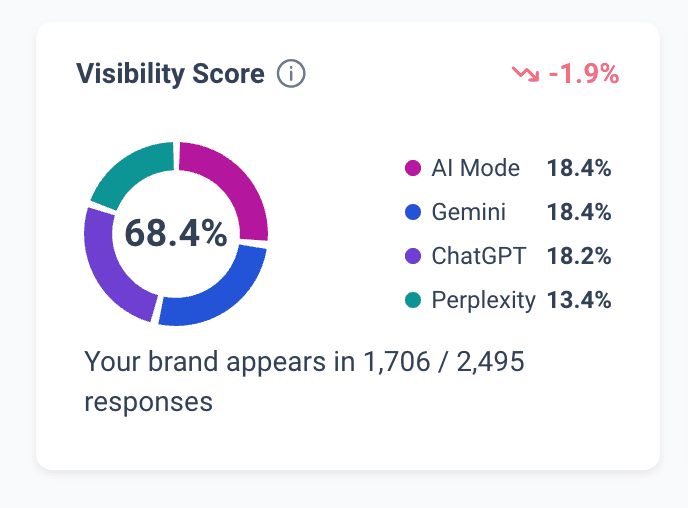
- Identify models where your brand has a strong presence or is underrepresented.
- View the same model-level contribution breakdown for competitors.
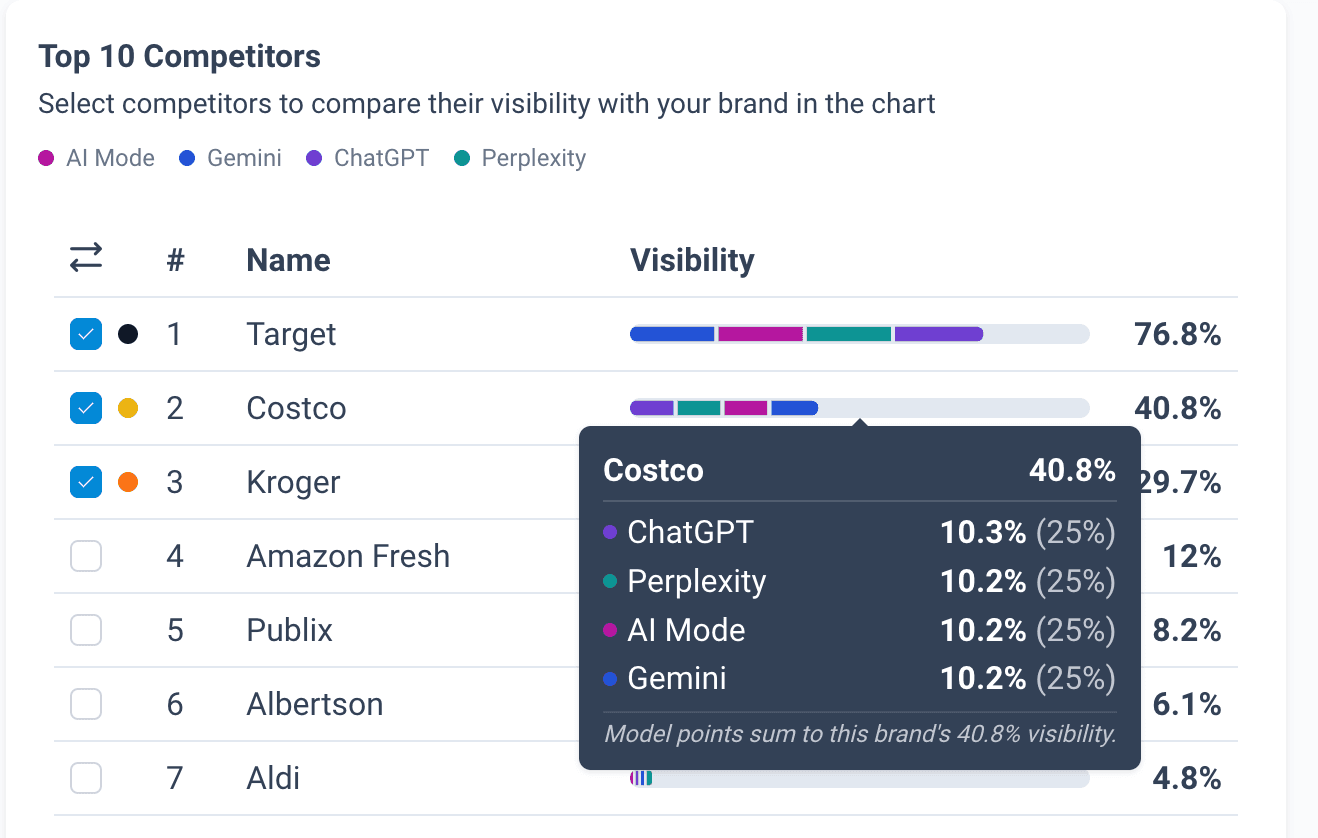
See AI Search Visibility dashboard for more information on AI Visibility.
Go deeper into your AI visibility performance with detailed brand and category insights
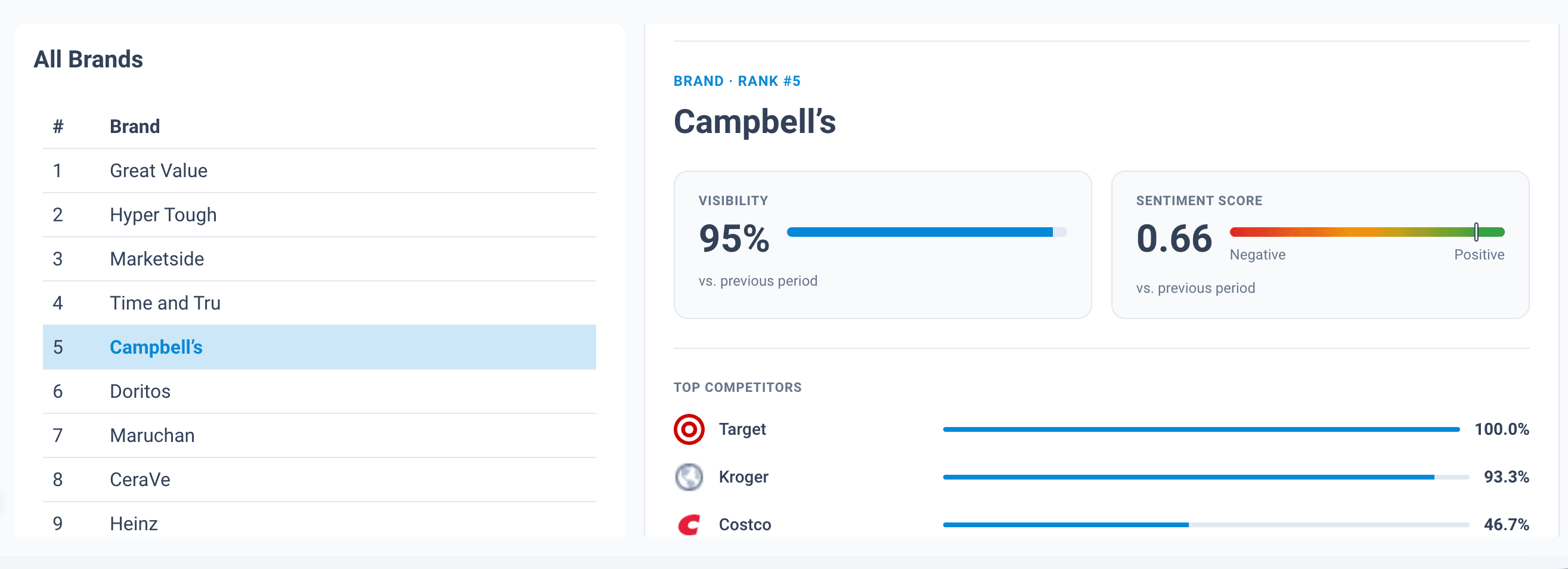
The AI Visibility dashboard now includes a detailed view for every tracked brand and product category, covering the prompts, responses, sentiment, and competitors behind each visibility score. This closes the gap between a high-level dashboard overview and the specific insights needed to act across ChatGPT, Gemini, Perplexity, and Google AI Mode.
Now you can:
- Browse the complete list of tracked brands or product categories, not only the highest-ranking entries.
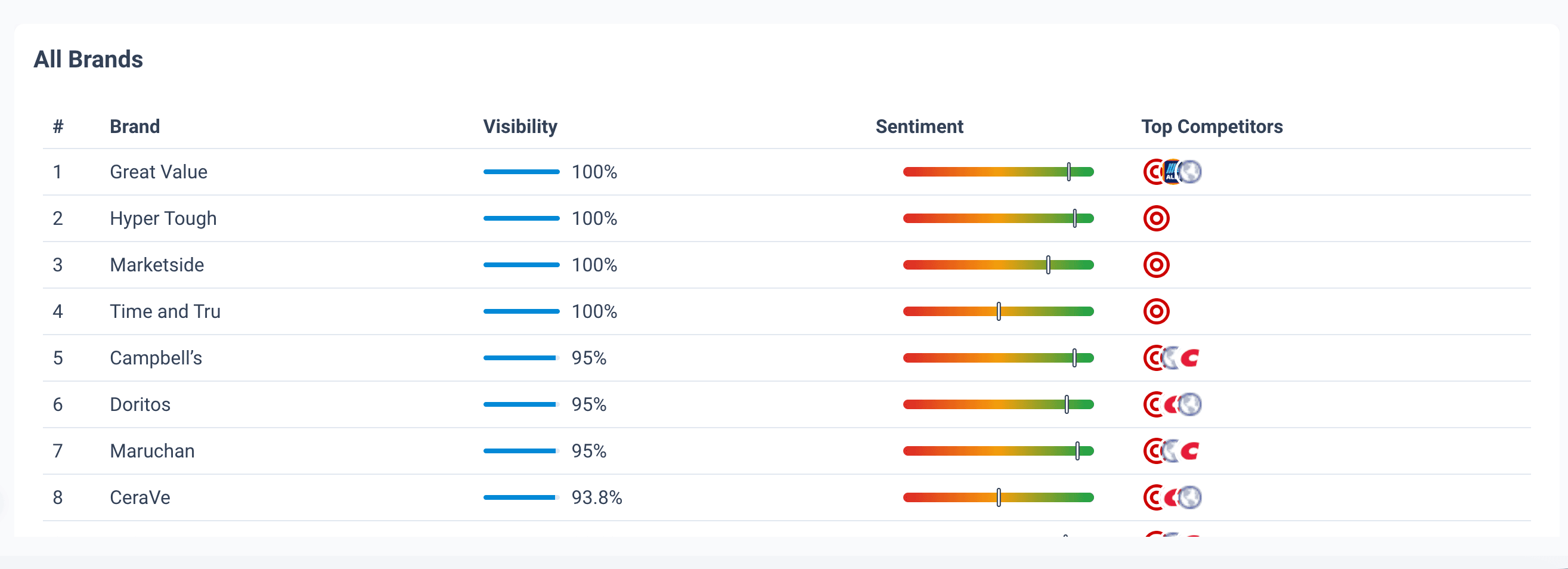
- View visibility score, performance trend, sentiment score, ranking, and closest competitors in one place for any brand or category.
- Review the prompts driving visibility across transactional, best deal, and support and returns intents.
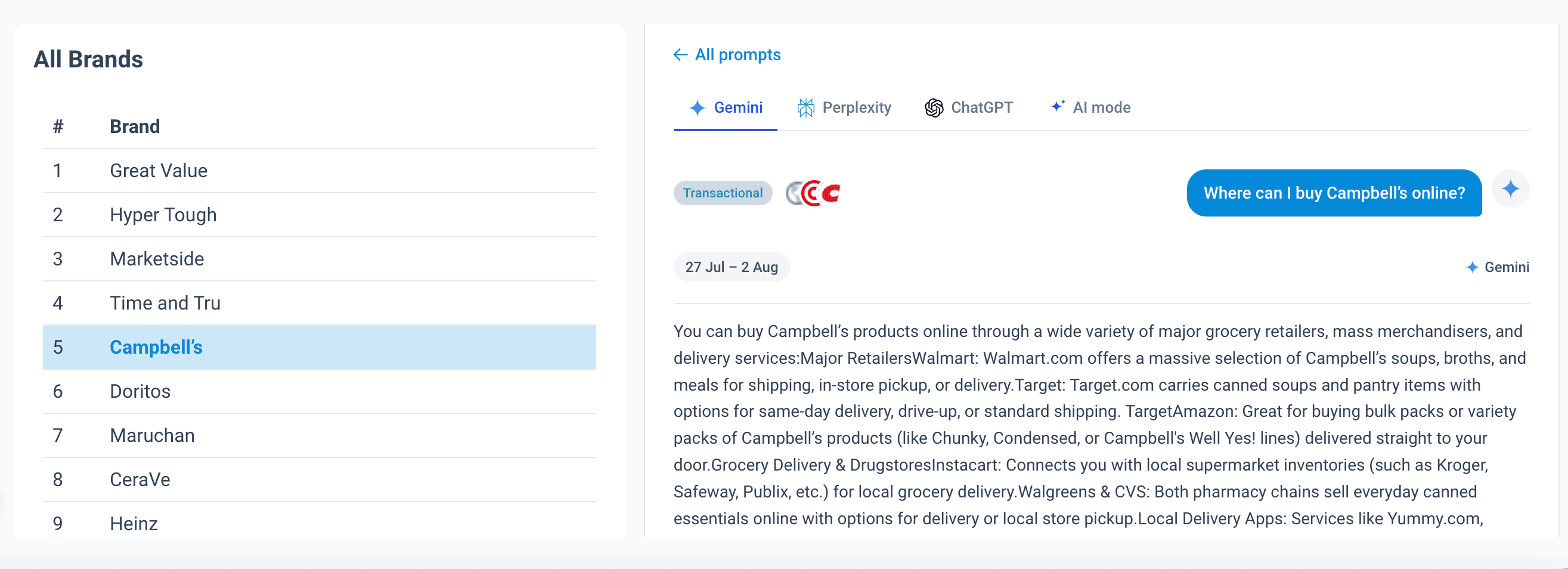
- See how different AI models responded to each prompt across the selected time period.
See AI Search Visibility dashboard for more information on AI Visibility.
More flexible rulebox conditions with scheduling, list support, and pause controls
Rulebox Conditions now give you finer control over which products your IF-THEN logic applies to and when it runs. This makes complex rule setups easier to test, troubleshoot, and adjust without rebuilding them.
Now you can:
- Use Dynamic Inclusion/Exclusion lists directly inside Rulebox Conditions to control which products a rule applies to.
- Schedule conditions to be triggered or evaluated at defined intervals rather than only on manual runs.
- Pause and unpause individual conditions without losing your configuration.
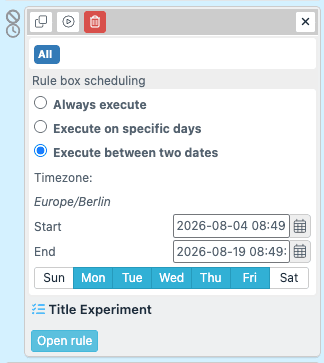
See Apply rule boxes based on conditions for more information.
Make attributes mandatory only when they need to be with conditionally mandatory attributes
Export templates now support conditional attribute requirements, so Productsup validates whether an attribute has a value only when the relevant condition is met. Channel requirements that depend on other attributes are modeled once in the template and checked automatically, surfacing missing values in Data View before your products are exported.
Now you can:
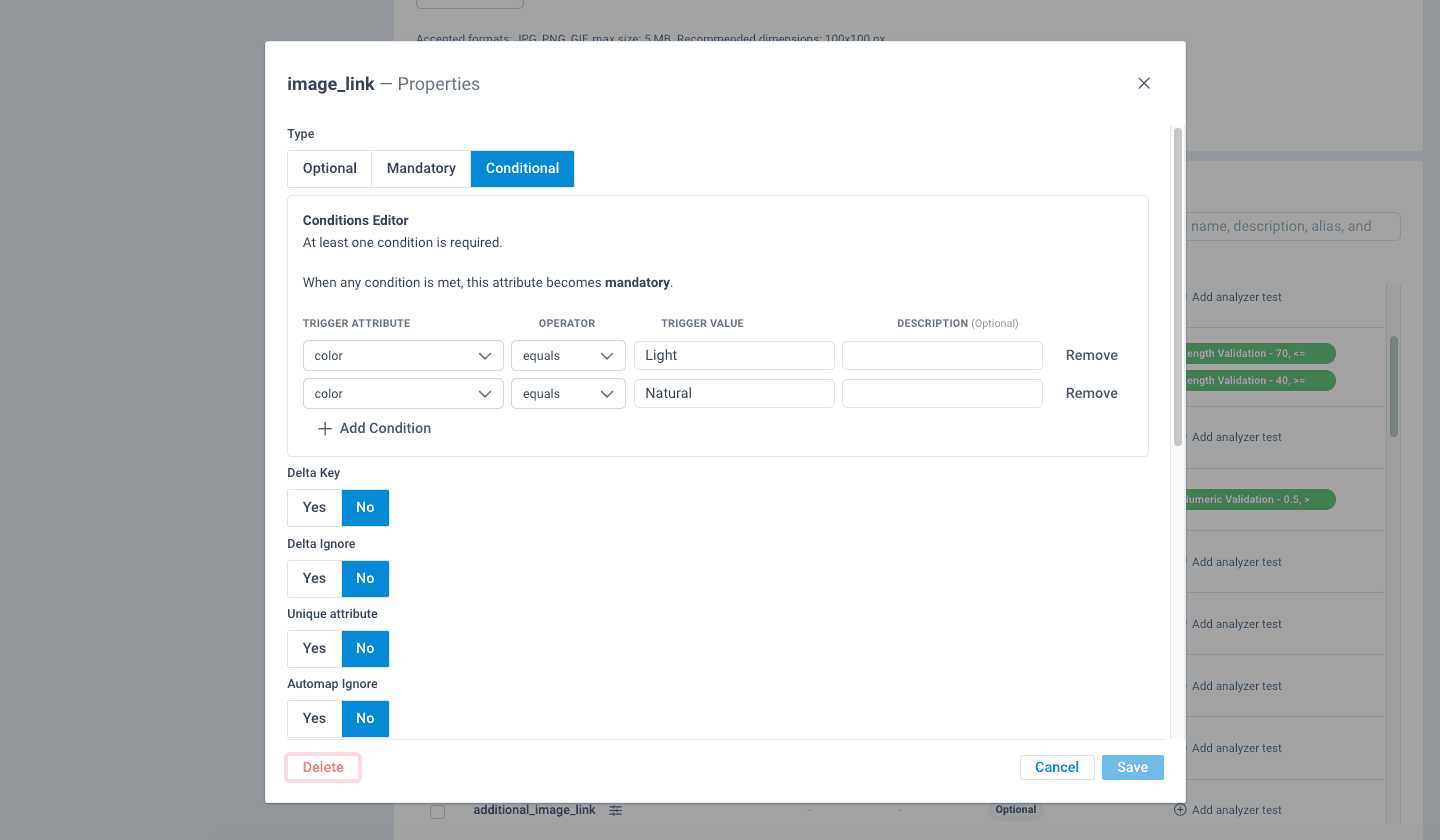
- Set attributes to Conditionally Mandatory in Export Template Management based on the value of another attribute using equals, not_equals, or is_present logic.
- Identify affected products with a missing value in Data View.
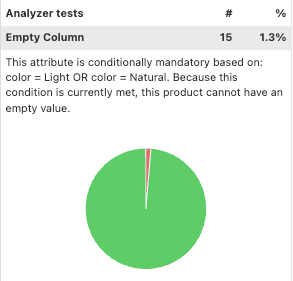
- Review the corresponding validation error in the Error Log before channel submission.
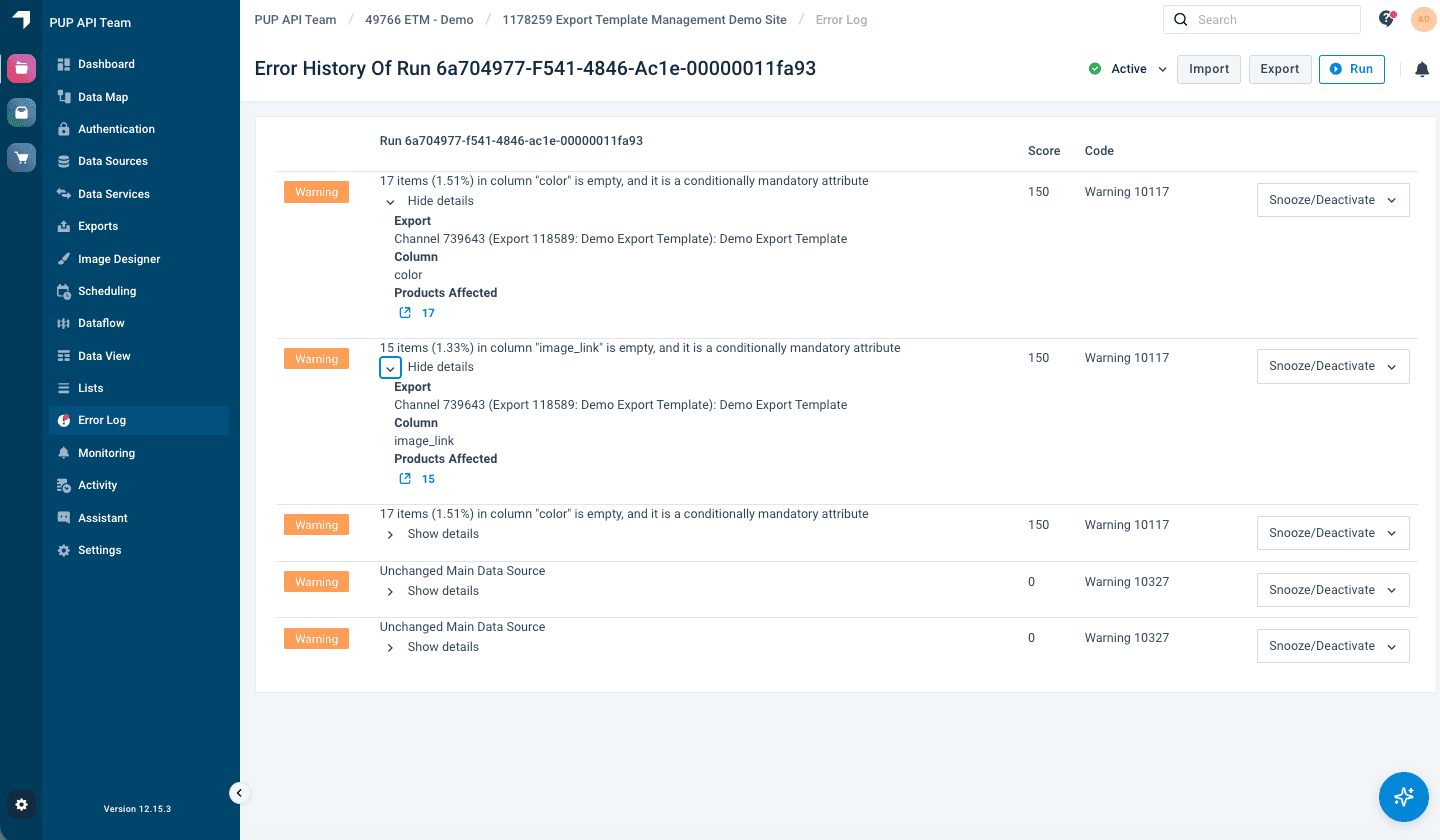
- Let Productsup validate conditional requirements automatically without building additional Analyzer Tests or doing manual cross-checking.
See Conditionally mandatory attributes for more information.
News about integrations
Keep your Google product feeds running by migrating to the new Google Merchant API before August 18
Google is retiring its Content API for Shopping on August 18, 2026, and replacing it with the new Merchant API. Productsup now supports the new Merchant API as a destination, giving you a straightforward migration path to ensure your product feeds continue reaching Google without interruption.
Now you can:
- Switch your existing Google export destination to the new Merchant API destination in Productsup.
- Maintain uninterrupted product feed delivery to Google through and beyond the August 18 deprecation date.
- Stay aligned with Google's latest API requirements without rebuilding your data setup from scratch.
See Migrate from Google Content API to Merchant API for more information.
Increase AI visibility with Google conversational attributes
Productsup now supports Google Merchant Center's Conversational Attributes through a new dedicated channel, allowing you to submit richer product context to Google. Providing this deeper contextual detail increases the likelihood that your products are discovered and recommended across AI-driven shopping surfaces.
Now you can:
- Send conversational attributes to Google Merchant Center through the new Google Merchant Center Conversational Data channel in Productsup.
- Deliver contextual product detail that goes beyond standard attributes to improve discoverability in AI-powered shopping queries.
- Position your products for early-mover advantage as Google expands its AI-driven and agentic commerce capabilities.
See Google Conversational Attributes for more information.
Sell on Walmart Marketplace directly from Productsup
Productsup is now an official Solution Provider at Walmart Marketplace and supports it as a native integration, letting you manage product listings, price and inventory updates, and order data for the US's second-largest marketplace from within the platform. This means no more manual exports or separate tooling to keep your Walmart Marketplace feeds up to date.
Now you can:
- Create and update standard seller listings and Walmart Fulfillment Services items directly from Productsup.
- Manage price and inventory updates via a dedicated integration.
- Sync order data alongside product feed management in one place.
- Set up and manage the Walmart Marketplace channel consistently with how other marketplace integrations work in Productsup.
Stay compliant with Amazon's updated product title structure for item name and item highlights
Amazon has split product titles into two separate fields — item_name (up to 75 characters) and the new title_differentiation attribute, also called Item Highlights (up to 125 characters) — for all listings submitted or updated on or after July 27, 2026. Productsup's Amazon automation now supports both fields across all affected product types, regions, and Seller and Vendor channels, so you can map the new field and keep your listings compliant without rebuilding your setup.
Now you can:
- Map the new title_differentiation (Item Highlights) attribute alongside item_name in your Amazon export setup.
- Apply the updated title structure across all affected product types, regions, and both Seller and Vendor channels.
- Reduce the risk of rejected listings or suppressed products caused by exceeding Amazon's updated character limits.
How is this guide?